Undergraduate Programs

Image
Marine biology hero — tide pool observation — Program imagery, marine biology cluster.

Growing seafood and managing wild stocks, taught as one subject because in practice nobody works on only one of them.

Image
Marine biology hero — tide pool observation — Program imagery, marine biology cluster.

An engineering degree first and a marine one second. You will build a vehicle, test it in the basin, and probably break one before you graduate.

Image
Marine biology hero — tide pool observation — Program imagery, marine biology cluster.

The physics, chemistry and geology of the ocean, taught by a department that operates its own research vessel. Every student in this program goes to sea.

Image
Marine biology hero — tide pool observation — Program imagery, marine biology cluster.

The geology of the ocean and the coast — sediment, structure, and the climate record held in both. The smallest of the undergraduate science programs and the one with the most field time.

Image
Marine biology hero — tide pool observation — Program imagery, marine biology cluster.

The foundational degree in marine life, and the route into most of the graduate work that follows it. Field work starts in the first year.

Image
Marine biology hero — tide pool observation — Program imagery, marine biology cluster.

Ocean governance taught inside a science faculty, so that the policy arguments rest on the evidence rather than gesturing at it. Includes the policy clinic.
Image
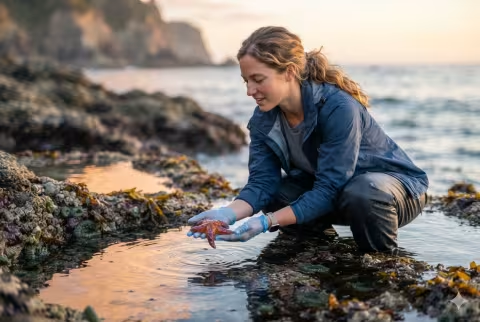
Marine biology hero — tide pool observation — Program imagery, marine biology cluster.

The applied environmental degree, built around estuaries, water quality and the coast. It is the most interdisciplinary program we run.